
Travails in Iceland
A reluctant traveller discovers glaciers, geothermal heat, eye-watering prices—and a surprising Irish connection at the edge of the Arctic.

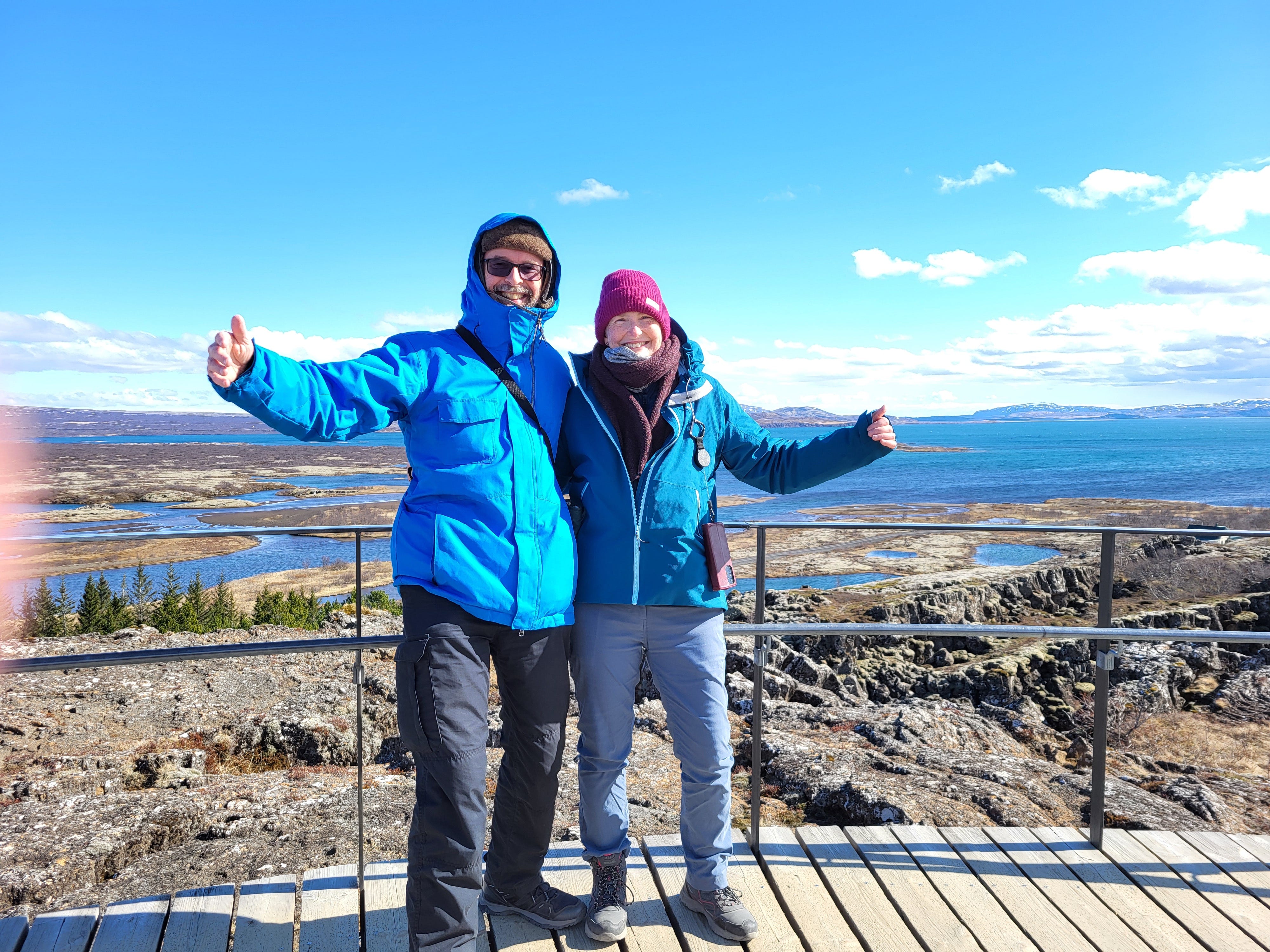
Homebird Abroad
I’m just back from Iceland!
I’m a homebird. Left to my own devices, I’d never leave Ireland—or maybe even my home in the County Meath countryside!
Travel, in my book, is travail. Seemingly, the words have the same root. So me missus organized the trip and presented it to me as a gift. So, yeah, I wouldn’t have gone of my own accord. Had she discussed it with me beforehand, I might have counter-suggested exploring the Wild Atlantic Way right here in beautiful Ireland.
That said, I don’t regret what I imagine will be my only trip ever to Iceland.
It’s a two-and-a-half-hour flight from Dublin to Reykjavik. The Airbnb apartment my better half had booked was gorgeous. While the weather outside was bitterly cold, indoors it was snug, comfy—at times almost too hot! They’ve geothermal heating in Iceland, so there seems to be no shortage of warmth indoors.
There’s also an abundance of clear, drinkable freshwater, perfectly fine to take from the taps. Seemingly, it comes from glaciers. There is, however, an unpleasant sulphur odour—like rotten eggs—once a tap is run. It tastes fine though.
The Price of Soup
Everything is unbelievably expensive. Think of the most expensive you’d expect anything to be, then double it. Yes, it’s that dear.
At one major tourist attraction, three bowls of soup cost €93!!! (Yes, ninety-three euros—not a typo.) Eh, we didn’t buy it!
The soundest advice we’d read was:
(a) bring food with us from Ireland, and
(b) buy groceries in the “Bonus” franchise supermarkets.
It’s no Lidl or Aldi, but at least the prices there weren’t as stratospheric as in restaurants.
On the last day of our trip, a taximan advised us that locals, if they’re eating out, go to Food Halls. We popped that into Google Maps and walked to the nearest one from our apartment.
During “happy hour”, a glass of beer (not a pint) cost 1,000 Icelandic krona (about €7), but the second beer—after happy hour—cost 1,690 krona (almost €12). Again, for a glass, not a pint.
It was the only time we dined out during the holiday. I had a plate of baked catfish. It cost 5,490 kr—more than €38. Yes, thirty-eight euro for one main dish of baked fish.
Into the Glacier


By far the most interesting trip we did was the “Into the Glacier: Langjökull Ice Cave Tour from Reykjavik”.
We had a wonderful, personable, adventurous guide named Ale—“Alex without the ‘x’,” as he introduced himself at basecamp.
We’d been driven there by minibus. After donning ice cleats over our waterproof footwear, we climbed aboard a massive vehicle that had once been a missile carrier.
We ascended towards the glacier over rocky, then icy and snowy ground, eventually reaching what looked like a surprisingly small opening in the earth. There was a whiteout as snow fell heavily. Without GPS, I’m not sure how anyone would have found the entrance to the vast glacier beneath.
We walked through ice caverns and saw a crevasse from underneath. According to our guide, it’s the only place in the world where you can do that, because normally you look down into a crevasse. But we were inside the glacier, looking up into it.
The highlight for me was a ceremony room with a large heart for love. I’ve conducted hundreds of weddings in my time as a humanist celebrant, but never—so far—inside a glacier! And yes, weddings are held there.
Horses, Museums and History
While in Iceland, we saw and heard several wonderful waterfalls.
We visited stables with Icelandic horses and learnt that no horses are permitted into the country, to protect the Icelandic horse from disease. And if a champion Icelandic horse travels overseas to compete internationally, it is never permitted to return.
We learnt too that the Icelandic horse has an extra gait that other horses lack—or was it two extra gaits? We saw a video demonstration where the horse’s legs moved furiously while the rider appeared almost perfectly still, in stark contrast to the extraordinary motion beneath them.
We visited excellent museums too, and there are lots of them scattered throughout Reykjavik. The city’s bus system is modern, clean and efficient. There are new-looking buildings everywhere. There’s clearly a lot of money about—a far cry from when Iceland went bankrupt in October 2008.
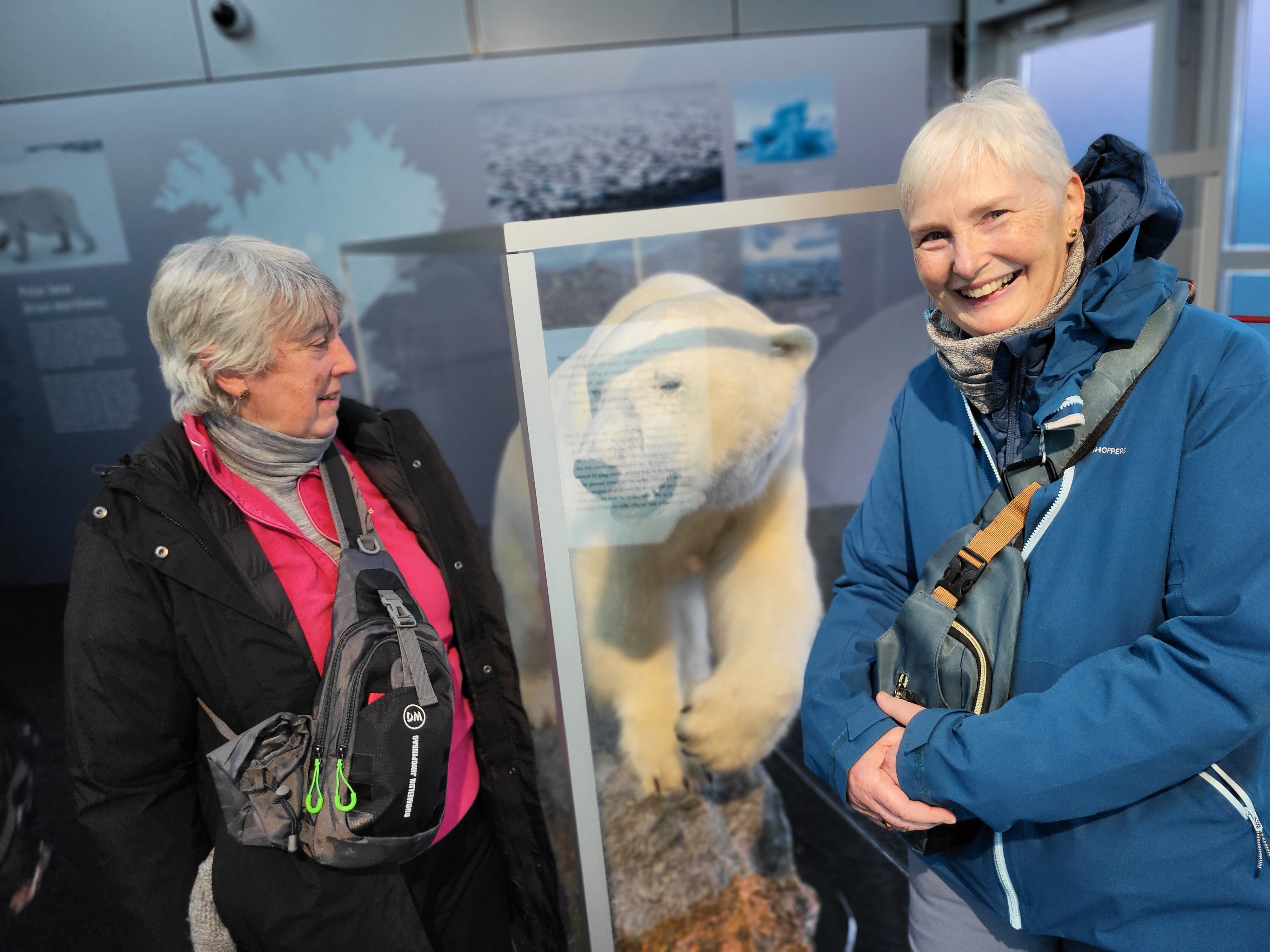
Ironically, that financial crash, along with the Eyjafjallajökull volcanic eruption in April 2010—which disrupted air travel across Europe—brought Iceland to the world’s attention. It was free publicity, and both events have been credited with helping to fuel the boom in Icelandic tourism, now one of the country’s main sources of income. Other major industries include fishing, aluminium and technology.
An Unexpected Irish Connection
I was fascinated to learn that a DNA study has shown most men in Iceland originated in Scandinavia, while most women seem to have originated in Ireland and Scotland. The suggestion is that Viking men colonised the island from Norway and later travelled to Ireland and Britain for female slaves.
While they would certainly have failed today’s consent conversation, they had impeccable taste in women!
Happy days,
Joe
Have you given a “like” to “My One and Only Life”?
Our latest song My One and Only Life is a direct appeal to live our one and only life to the full in this moment:
YouTube Link (or click below) for video with music and lyrics:
Have you listened to this playlist of Songs I wrote with Andrea Patron, The Rayne, and Zac Ware, guitarist with The Proclaimers:
Joe Armstrong’s acclaimed first memoir In My Gut, I Don’t Believe is available on Amazon in Kindle, Paperback, Hardback and Audible editions. His second memoir Saved by a Woman is available on Amazon in Kindle, Paperback, and Hardback editions.
